
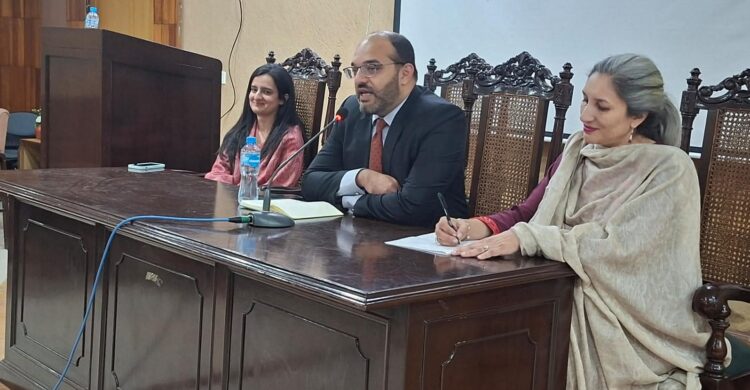
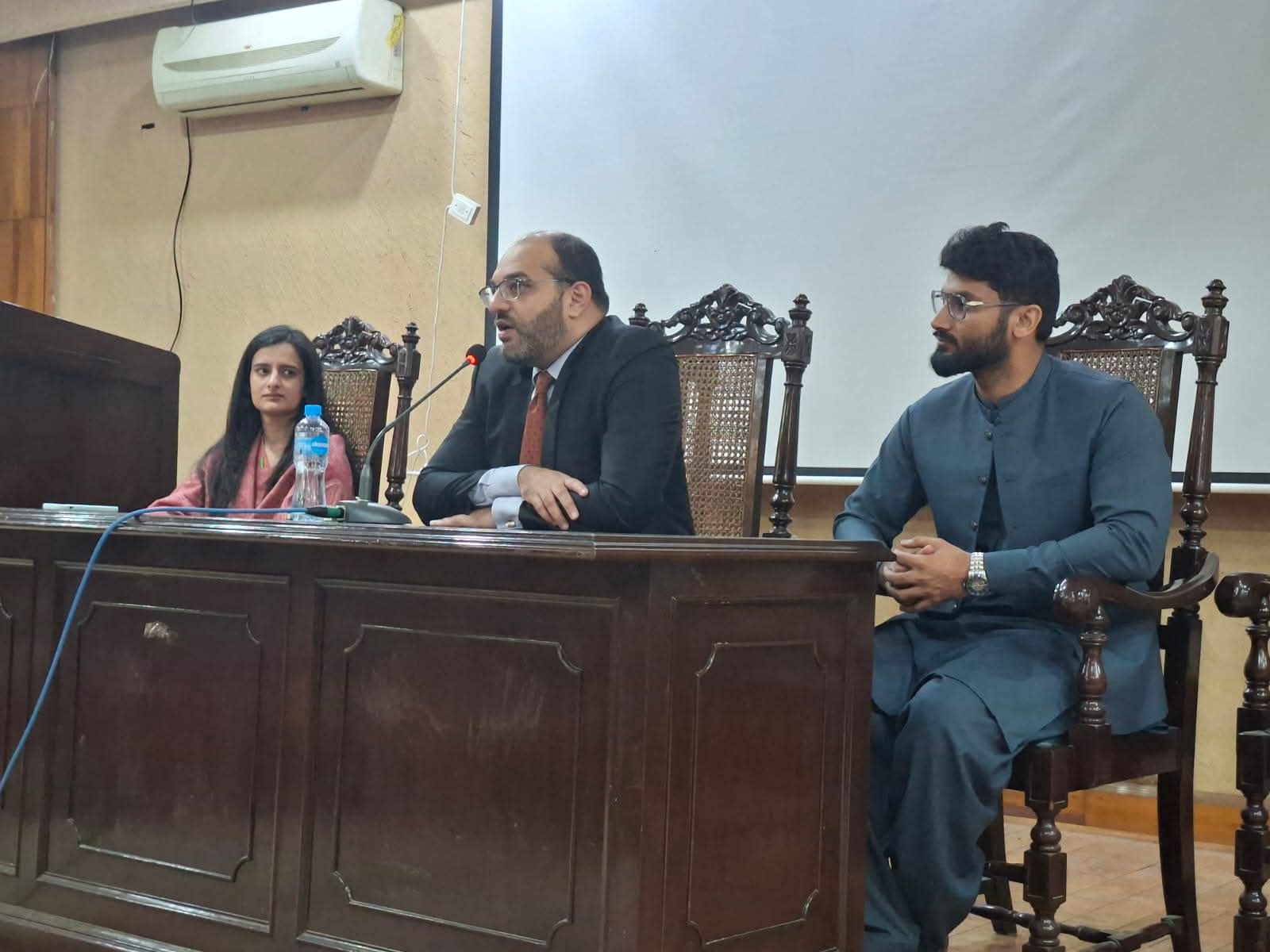
 On December 11th, MPhil & PhD Scholars benefitted from a talk on Global Power Dynamics and Rise of China by Syed Hassan Akbar, Chairman of the Strategic Policy Planning Cell, NSD. During his talk, he highlighted the impact of global power transition, on different regions and societies, and thereby transforming economies, employment, and security dynamics, particularly in South Asia and Pakistan. Furthermore, he mentioned that rise of China has challenged the global order, outpacing Western democracies, a theme reflected in Graham Allison’s book, “The Thucydides Trap”, China is reported to lead (outpace) the US in 13 out of the 15 top emerging technologies globally, whereas, in terms of strategic challenges for the US, China is noted for developing next-generation warfare models. The American strategy for dealing with China remains ambigous, where there is a bipartisan consensus in the US on China being a strategic competitor, some in the US advocate for coercion and confrontation with China via alliances, military means, and political economies. Others advocate for competing with China and establishing deterrenceto avoid a direct war. Big businesses and economies advocate for a strategy involving competition and cooperation with China (e.g., Nvidia, Apple).
Overall, the US has an unclear strategy regarding China. The US is still considered the global superpower and leads in many domains that China has not yet matched. China is focused on its economic growth, which may explain why it has yet to reach parity in numerous domains. Pakistan’s Foreign Policy Stance In these times of uncertainty regarding the world’s direction, requires the country to be cautious when structuring its policies. In terms of policy Recommendation, Pakistan needs to work with both the US and China and “hedge its bets”. Avoiding Alignment: It is considered wise not to be solely in one camp but to stay back and wait for the truths of the world to unravel. It is in Pakistan’s benefit to collaborate with both China and the US. Spheres of Influence: There is a rise in spheres of influence and questions about which country is tilted. China and Pakistan should not be held fully under the US “tentacle” umbrella. The Future World Order: The concept of multipolarity is yet to be established in clear terms. India is anticipated to be a major pole in the multipolar world when it is established. New Cold War Risks: Actions like the US forcing TikTok to be sold to an American company to avoid being banned suggest that two different blocs or poles might form again, similar to the Cold War. 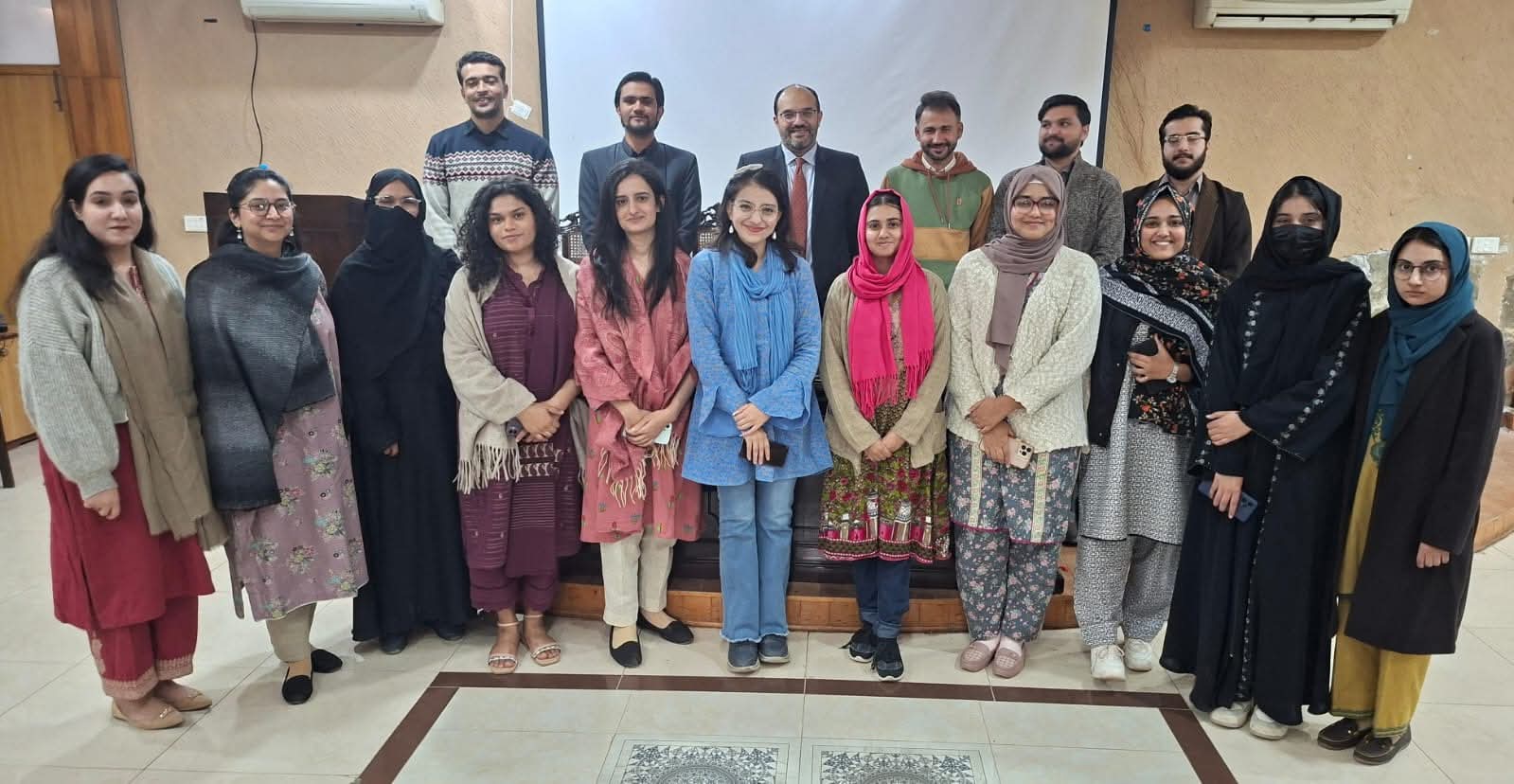 Pakistan faces regional challenges involving India, Afghanistan, and Iran, as well as questions around navigating challenges like the Pak-Saudi security pact. Given Pakistan’s location in South Asia, not the Middle East or Central Asia, it must focus on being strongly relevant and strategically balancing itself within its own region. Domestic Challenges Pakistan’s biggest internal challenges are rooted in demography and urbanization. Economic Strain: Population growth currently exceeds the country’s economic growth. This means the country is not creating enough jobs for its graduates and youth. Non-Traditional Security: Non-traditional security challenges include Artificial Intelligence (AI) and its potential transformative effect, which might make jobs obsolete in the coming two decades. If not leveraged strategically, South Asia’s large young population could become an economic and job problem. Urbanization and Migration: Pakistan has a high rate of urbanization, leading to migratory pressure on five key cities: Quetta, Lahore, Rawalpindi/Islamabad, and Karachi. Third-tier cities are not developing enough to absorb this migratory pressure. This pressure, especially for health care and hospital facilities, raises the question of whether Pakistan is capable enough to construct medical cities away from these cities to take up some of that migratory pressure. The seminar ended over a lively Q&A session.
Report Contributed by:
Mr Faizan Khan Barakzai
MPhil 1st Semester
Leave a Comment