
Introduction
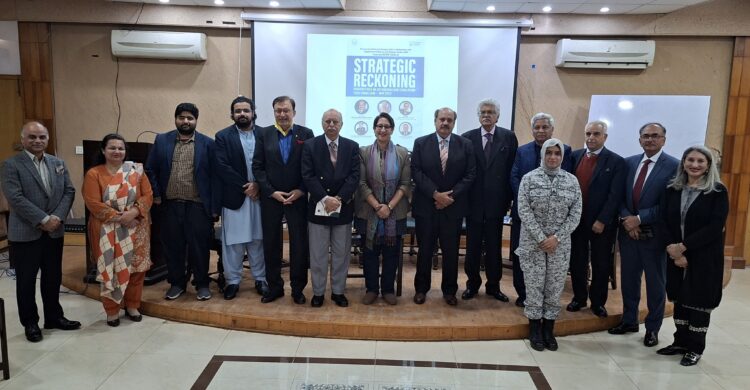
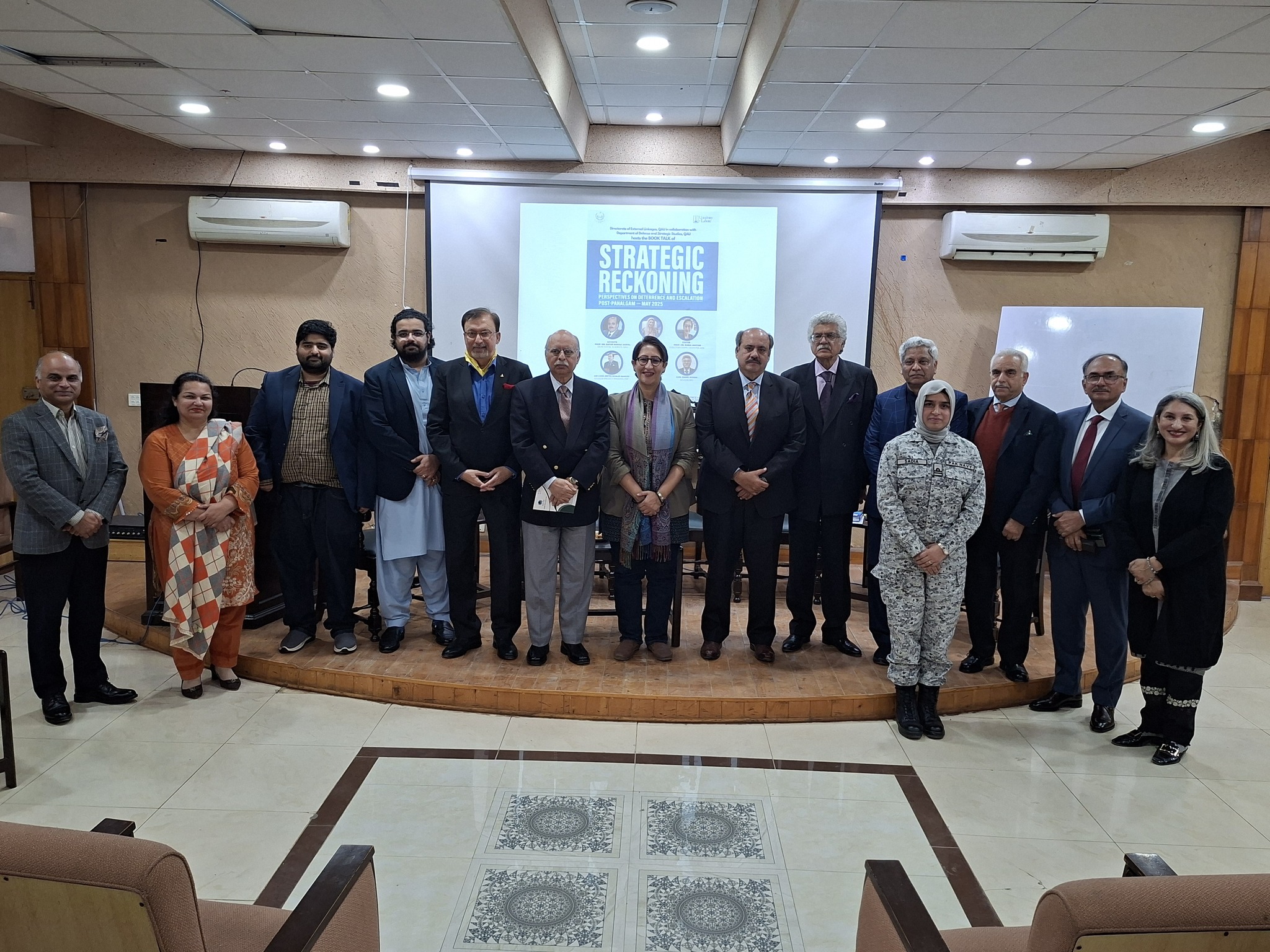
The Directorate of External Linkages, QAU, in collaboration with the Department of Defense and Strategic Studies (DSS), QAU, & CSSPR University Of Lahore hosted an intellectually rich Book Talk on 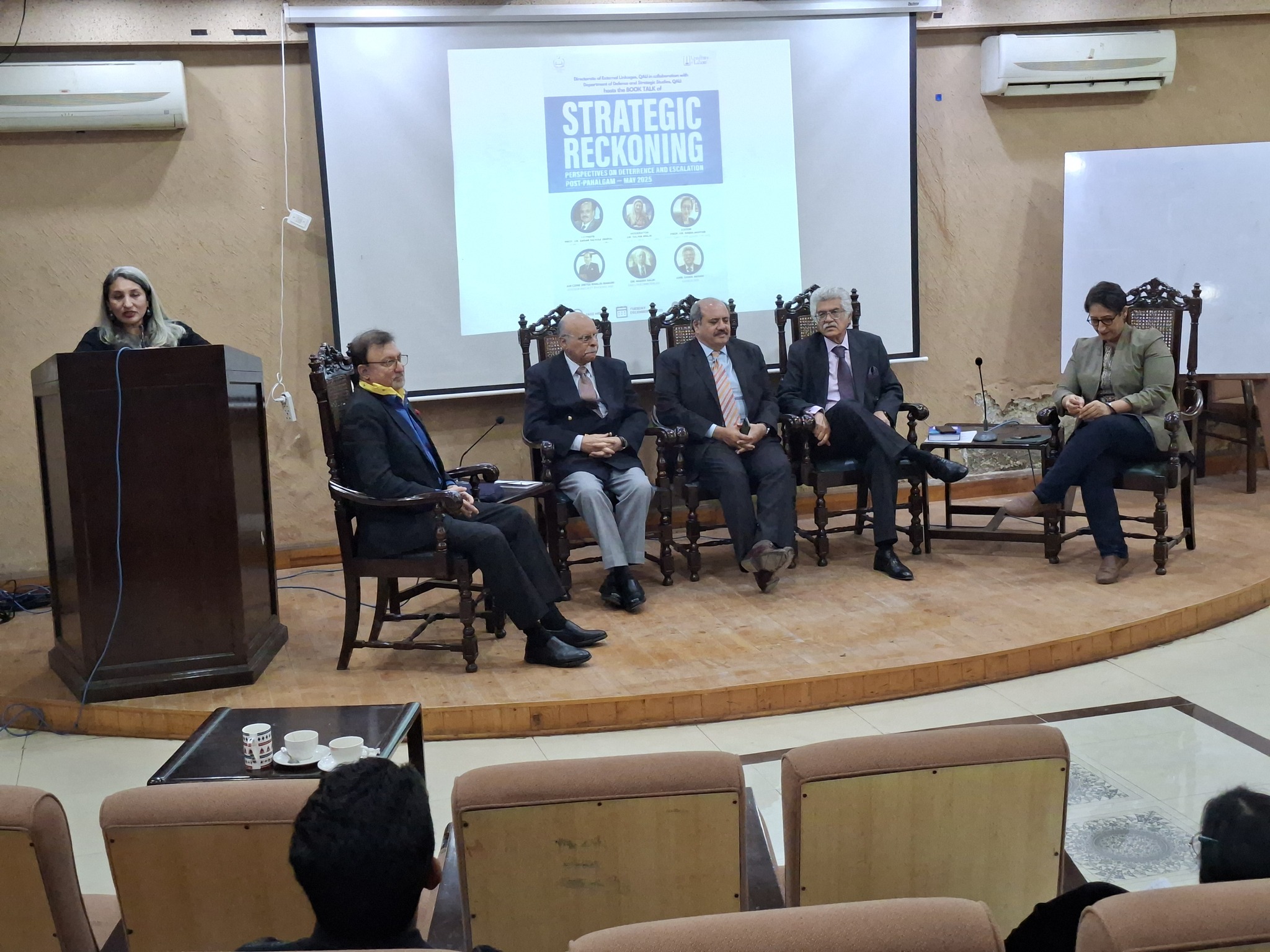 Strategic Reckoning: Perspectives on Deterrence and Escalation (Post-Pahalgam – May 2025) at the Conference Hall, DSS, QAU, Islamabad.The session formally commenced with the moderator, Dr. Salma Malik who opened the proceedings by welcoming the distinguished panel, faculty members, students, and policy practitioners. In her opening remarks, Dr. Malik framed the discussion by situating the edited volume by Dr Rabia Akhtar within the rapidly evolving strategic environment of South Asia, emphasizing the shrinking reaction time, blurred lines between peace and war, and the growing role of non-contact warfare. She highlighted that the seminar was not merely a book launch but a critical conversation on crisis stability, escalation management, and regional responsibility.
Overview of the Book
Strategic Reckoning was authored within an intensive period of one month and 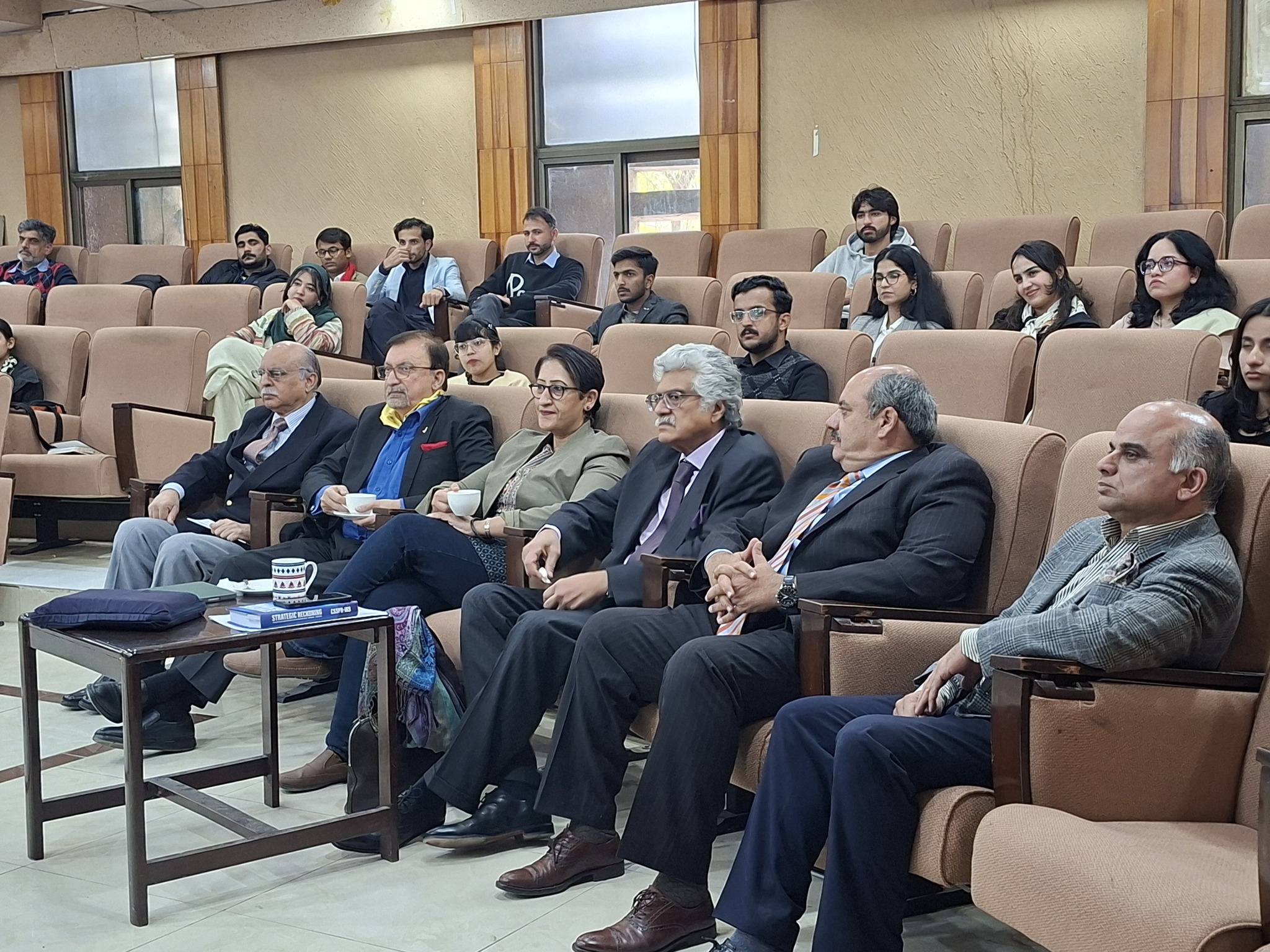 comprises 18 chapters written by six co-authors. As mentioned earlier, edited by eminent strategic analyst and academic Dr Rabia Akhtar, the book provides a rigorous assessment of the May 2025 crisis, arguing that ground operations were virtually eliminated, while air operations, missiles, long-range artillery, drones, and information warfare dominated the battlespace. Contributors contend that future conflicts in South Asia are likely to be short, sharp, and fought beyond visual range, severely constraining mobilization and decision-making.
Keynote Address
Prof. Dr. Zafar Nawaz Jaspal, Dean, Social Sciences, QAU, delivered the keynote address, underscoring the need for strategic learning and institutional memory. He argued that the May 2025 episode demands a serious strategic reckoning, warning that without internalizing lessons, the region risks normalizing escalation. He stressed that deterrence is not static and must be continually reassessed in light of evolving doctrines, technologies, and political behavior.
Panel Discussions and Expert Insights
Changing Character of Warfare
Panelists collectively noted that the May 2025 crisis illustrated a decisive shift toward non-contact warfare, where missiles, drones, long-range artillery, and air power dominate. Such capabilities significantly reduce warning time and restrict conventional mobilization, increasing the probability of 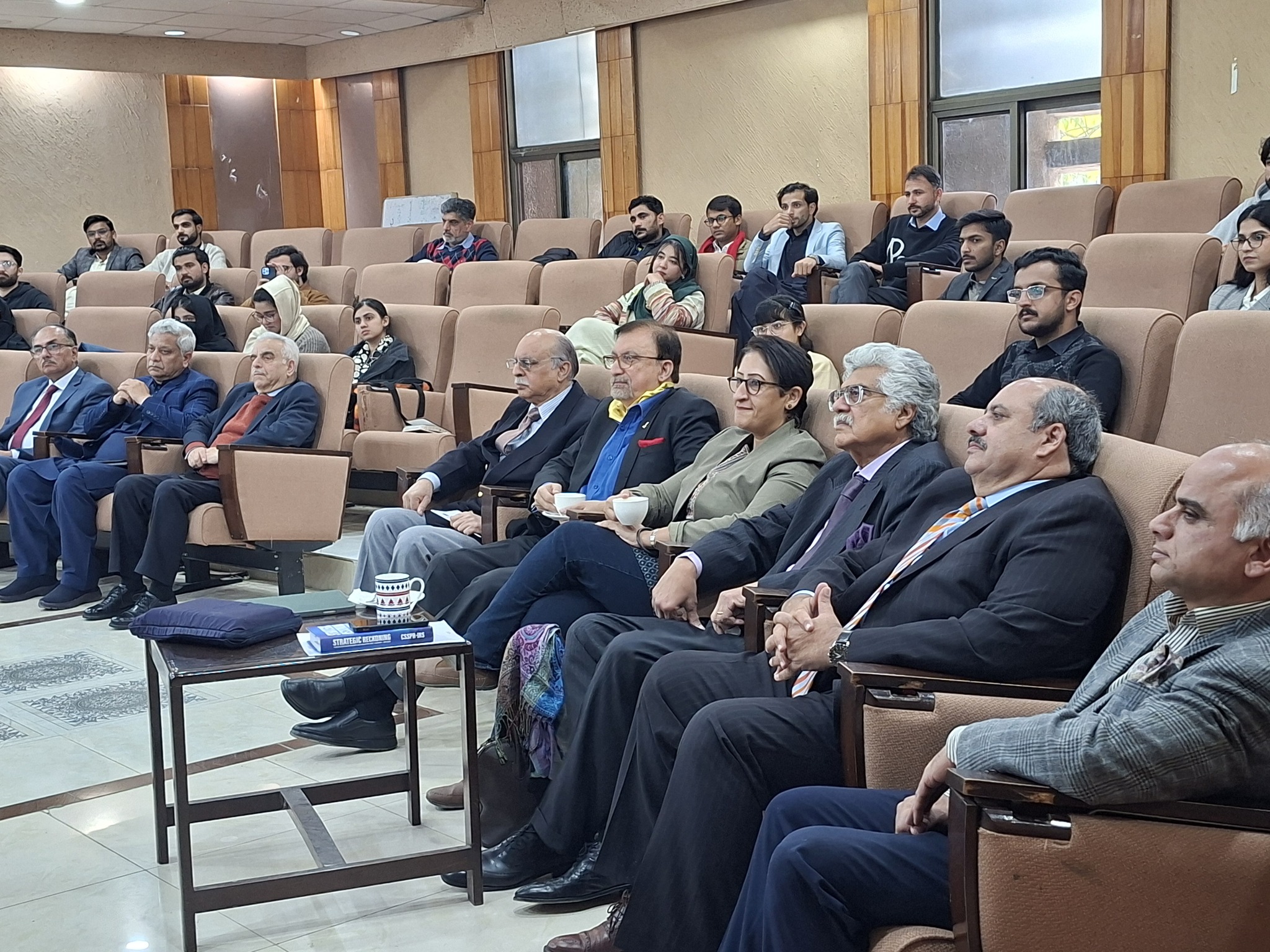 rapid escalation.Concerns were raised over nuclear signaling, including attempts to target sensitive locations such as Sargodha and the Noor Khan Air Base, highlighting how quickly conventional engagements can acquire nuclear overtones. Air Cdre (Retd) Khalid Banuri, Advisor, Project Phoenix, PAF, provided an in-depth analysis of air power’s central role in contemporary conflict. He emphasized that air operations now shape both military outcomes and escalation control, while also responding to audience questions on the strategic implications of air-centric warfare in future crises. Dr. Naeem Salik, Executive Director, Strategic Vision Institute, focused on naval and air power jointness with the army, arguing that future deterrence stability depends on coherent, integrated force employment rather than service-specific approaches. Speakers highlighted how Indian domestic politics, particularly under the BJP, remains deeply intertwined with Pakistan-centric narratives. It was argued that leaders often fall into a “commitment trap,” where political rhetoric creates pressure for visible military action, compelling escalation to satisfy domestic audiences.
Theme of the discussion
A major theme of the discussion was the absence of robust communication mechanisms between India and Pakistan. Panelists stressed that reaction time in a crisis can be less than three minutes, making miscalculation extremely dangerous. Proposed measures included:
• Establishing hotlines between Foreign Secretaries and Prime Ministers
• Reviving back-channel diplomacy and Track-II engagements
• Strengthening Confidence-Building Measures (CBMs)
Amb. Zamir Akram, Advisor, SPD, strongly emphasized that deterrence cannot survive without communication, warning against assumptions that escalation can always be managed.
Role and Limits of External Actors
The panel discussed the involvement of external players, including the United States, noting that intervention was driven largely by fear of nuclear escalation rather than regional stability. Participants cautioned that reliance on external mediation is risky, as third parties are guided by their own strategic interests and may intervene late—or not at all—especially if escalation outruns diplomacy. A reference was made to a recent Track-II meeting in London, where a former Indian ambassador reportedly suggested that any future conflict would resume from where it last ended, including potential strikes on Pakistan’s nuclear facilities, raising alarm about emerging escalation norms.
Key Takeaways from the Book
Conclusion and Closing Remarks
In the concluding segment, Air Cdre (Retd) Khalid Banuri and Amb. Zamir Akram responded to the final questions from the audience, addressing concerns related to escalation thresholds, communication breakdowns, and future crisis scenarios. The seminar concluded with closing reflections by Prof Dr Rabia Akhtar and Dr Salma Malik , who emphasized that while deterrence may have held in May 2025, the region now operates in a far more fragile strategic environment with a higher baseline of risk. They cautioned against the normalization of escalation and urged policymakers, scholars, and institutions to consider what kind of regional order is being shaped when every incident becomes a rehearsal for war. The session ended with a call for strategic restraint, credible communication, and responsible narrative-building to prevent future crises from crossing irreversible thresholds.
Prepared by:
Hasnain Iqbal MPHIL 1st Semester
Leave a Comment