
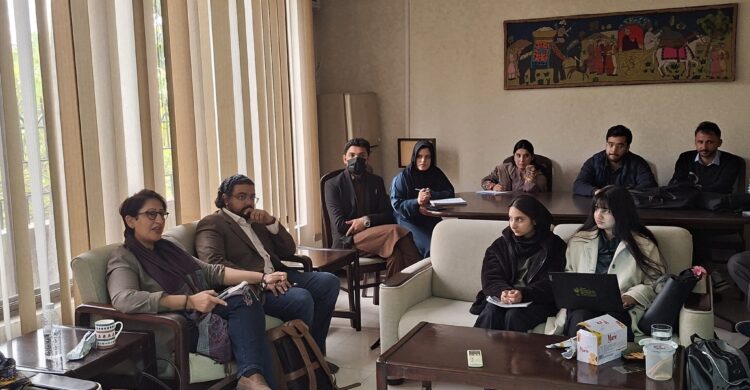
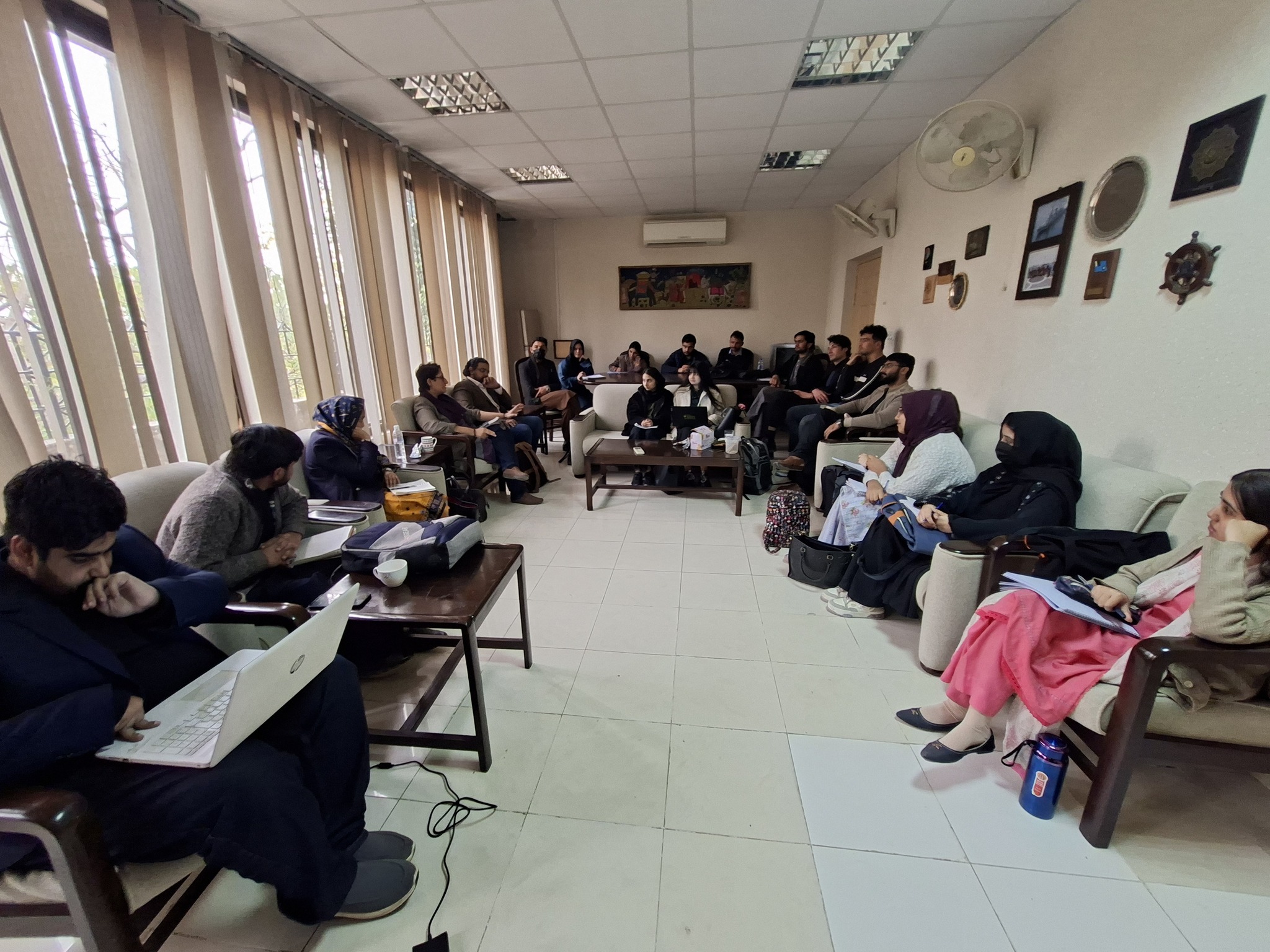
 On December 17th, Dr Rabia Akhtar Dean Faculty of Social Sciences, University of Lahore joined the DSS MPhil fellows for a conversation on the Formulation of Pakistan’s National Security Policy in a Complex Geopolitical Environment. The key Concepts Discussed canvessed a wide range of issues including Strategic Autonomy and Strategic Responsiveness: The analytical dilemma of internally-generated, interest-based policy orientations versus those that are largely influenced by external forces and alliance relations. Internal Pushes of Security Policy: Economic stability, demographic issues, ideological discourses, civil-military synergies and institutional capacities.
Regarding the Extrinsic Security Policy Drivers: Great power politics (US-China in the first place), domestic politics (India, Afghanistan, Iran), international financial institutions and international norms regimes. she also discussed the geopolitical Constraint & Opportunity: 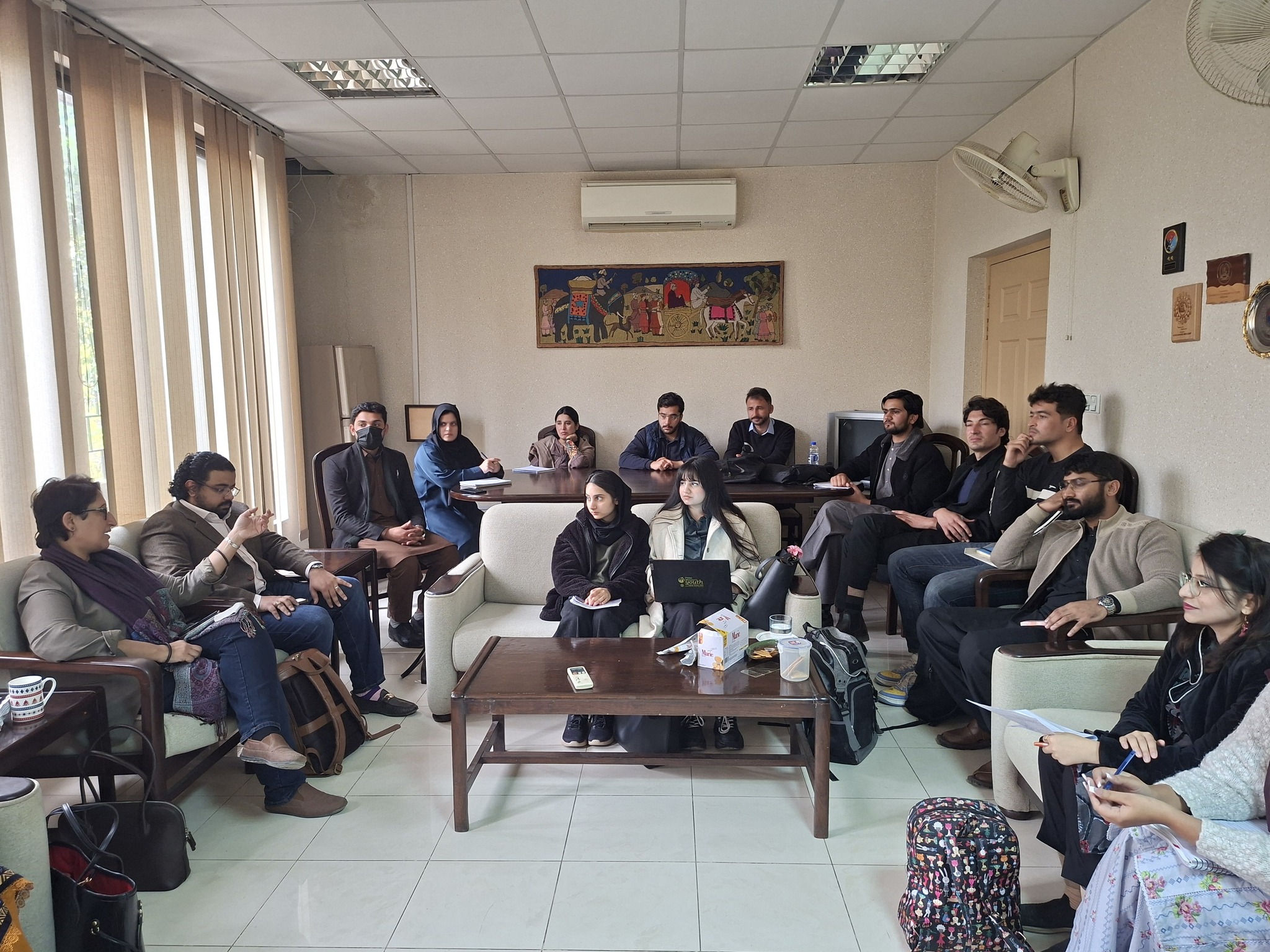 The role of geographical facts and the complex of regional security restricting and opening avenues of foreign policy and strategic posturing.
Also Discussed one the student on-going research work on similar topic; (A Critical analysis on Pakistan’s NSP 2022-2026)
the key takeaways were
Report Prepared by : Mr Muhammad Akhtar Shabbir
DSS MPhil Semester 02
Leave a Comment